
Published: May 6, 2026 | By Top Headline News World Desk
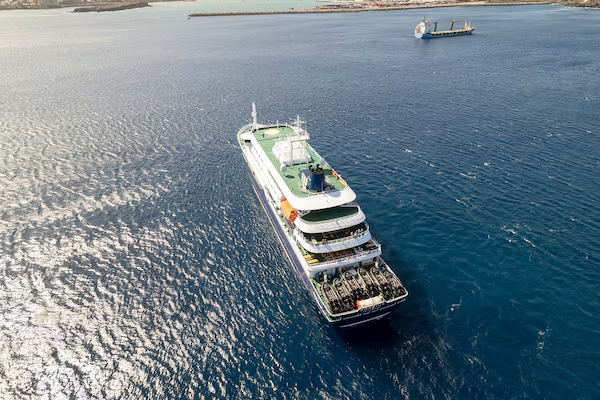
A rare and deadly respiratory hantavirus has killed at least three people aboard a cruise ship stranded off the coast of Cape Verde in the Atlantic Ocean, triggering a global health alert as the World Health Organization moves to track the outbreak and prevent further spread. The MV Hondius, carrying nearly 150 passengers and crew, has been anchored in the waters off Praia, Cape Verde’s capital, since the outbreak was confirmed, awaiting emergency medical support and evacuation coordination.
Hantavirus is a rare but highly dangerous pathogen normally transmitted through contact with the urine, saliva, or feces of infected rodents such as rats and mice. Human-to-human transmission is extremely rare in most strains, though specific variants, particularly the Andes hantavirus found in South America, have shown limited person-to-person spread. Health authorities are working to identify which strain is involved aboard the Hondius, a critical determination for understanding how other passengers and crew may have been exposed.
The WHO confirmed the three deaths and said the ship had been placed under strict isolation protocols. Cape Verde authorities and international maritime organizations coordinated emergency medical evacuations for the most critically ill, while the remaining passengers and crew were held onboard pending health clearance. Several additional individuals were reported to be receiving treatment for respiratory symptoms, though the agency had not confirmed further fatalities as of early May 6.
Cruise ship outbreaks have historically been difficult to contain because the enclosed environment, shared ventilation systems, and common dining areas accelerate the spread of infectious agents. The fact that this involves hantavirus rather than a more familiar pathogen like norovirus has raised the alarm level considerably. Hantavirus pulmonary syndrome carries a mortality rate of between 38% and 50% in untreated cases, making it one of the most lethal respiratory illnesses known to public health.
The outbreak follows a broader pattern of heightened global health vigilance in 2026. With the Iran war disrupting medical supply chains and straining WHO resources across the Middle East and South Asia, global health infrastructure is already operating under unusual pressure. The Cape Verde incident adds a new dimension, forcing international health bodies to respond to an isolated maritime emergency with limited shore-based support infrastructure in a small island nation.
Travel and maritime insurance sectors are watching the situation closely, as are cruise operators globally. A confirmed hantavirus outbreak aboard a passenger vessel raises immediate questions about rodent control protocols, food storage standards, and the speed with which cruise lines can identify unusual respiratory illness clusters. Multiple industry associations have contacted the Cape Verde authorities and the WHO requesting full epidemiological details to assess whether similar precautions are needed on other vessels operating in the Atlantic.
Read More: Trump Administration Strips DACA Protections for 500,000 Dreamers as Board of Immigration Appeals Rules Status No Longer Blocks Deportation
Passengers aboard the Hondius reported fear and confusion, with many saying they received limited information in the early hours of the outbreak. Several expressed concern about the adequacy of medical facilities on board for managing a novel respiratory illness of this severity. Emergency supplies and additional medical personnel were being flown to Cape Verde from Portugal and Senegal as of Tuesday evening.
The WHO has not yet classified the event as a public health emergency of international concern, but has dispatched a rapid response team to Cape Verde to support local health authorities. The agency said it would provide a full situation update within 48 hours. Health officials worldwide are urging calm while stressing that early containment measures, including the ship’s quarantine, appear to be limiting any potential spread to shore-based populations in Cape Verde.


