
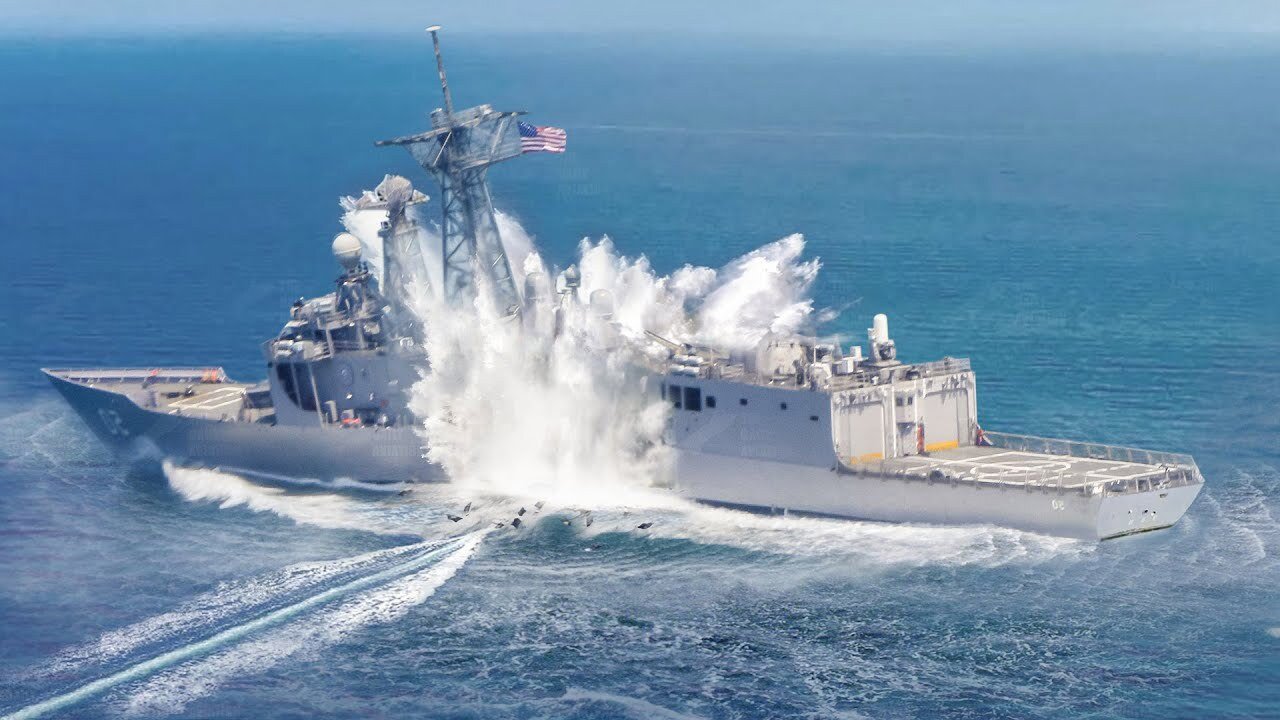
The fragile ceasefire between the United States and Iran is closer to collapse than at any point since the April 8 truce agreement. On Tuesday, May 5, Secretary of State Marco Rubio confirmed from Washington that U.S. Navy forces had already destroyed seven Iranian fast-attack boats in the Strait of Hormuz as part of Operation Project Freedom — the Pentagon’s military drive to restore commercial shipping through the world’s most important oil chokepoint.
Iran fired back — both rhetorically and physically. The Iranian Revolutionary Guard Corps (IRGC) published a new map of the Strait of Hormuz showing an expanded Iranian area of control and warned all commercial vessels to stick to IRGC-designated corridors or face what it called a “decisive response.” Iran’s armed forces’ Khatam al-Anbiya Central Headquarters issued a statement through the Fars news agency: any foreign military force, and specifically U.S. forces, approaching or entering the Strait of Hormuz would be targeted. Hours after the statement, Iranian drones struck a tanker linked to the UAE’s main state oil company. No injuries were reported. But the attack ignited a major fire at the Fujairah Oil Industry Zone on the UAE’s eastern coast, a critical storage and bunkering hub for global energy supplies.
The Strait of Hormuz has been functionally closed to most commercial traffic since February 28, 2026, when the United States and Israel launched a surprise air campaign against Iran that killed Supreme Leader Ali Khamenei and decapitated Iran’s military leadership. Iran responded by blockading the strait, planting sea mines, launching drone and missile attacks on vessels, and imposing tolls of over $1 million per ship on those it permitted to pass. The IRGC initially forbade ships from countries aligned with the U.S. and Israel. As of late March, it was allowing vessels from China, Russia, India, Iraq, and Pakistan to transit.
Since the strait’s closure, roughly 25 percent of the world’s seaborne oil supply and 20 percent of global liquefied natural gas have gone missing from markets. Oil prices have surged. Egypt’s urban inflation, which dropped slightly to 14.9 percent in April from 15.2 percent in March, still reflects fuel and food price pressure from the conflict. African economies, many of which remain structurally linked to oil import costs, face a compounding crisis.
Read More: China Fireworks Plant Explosion in Hunan Province Kills Dozens as Search and Rescue Operations Wind Down
Project Freedom launched on May 4 with the goal of restoring commercial shipping. U.S. Central Command deployed over 100 land- and sea-based aircraft, guided-missile destroyers, and multi-domain unmanned platforms to guide ships through the strait. On day one, two U.S.-flagged vessels completed the crossing. CENTCOM commander General Brad Cooper called it a success. Former U.S. Navy captain and military analyst Carl Schuster told CNN the number could grow to 20 to 30 ships per day if the operation holds. But the pre-war flow was 120 vessels per day, and military experts caution that Iran needs only to maintain the perception of danger to keep commercial operators away.
Trump expressed confidence, telling reporters that Iran’s military has been reduced to firing “peashooters” and that Tehran ultimately wants a deal. “They play games, but let me just tell you, they want to make a deal,” the president said. Iran’s Foreign Ministry said it is reviewing Washington’s latest peace proposal. However, Iranian officials insist that the proposal excludes nuclear program issues — a demand Washington considers non-negotiable. The next reassessment point is Friday, May 8. Markets are watching every ship that moves through those 21 miles.


