
By Top Headline World News Desk | May 7, 2026 | Media, Culture, Global News History
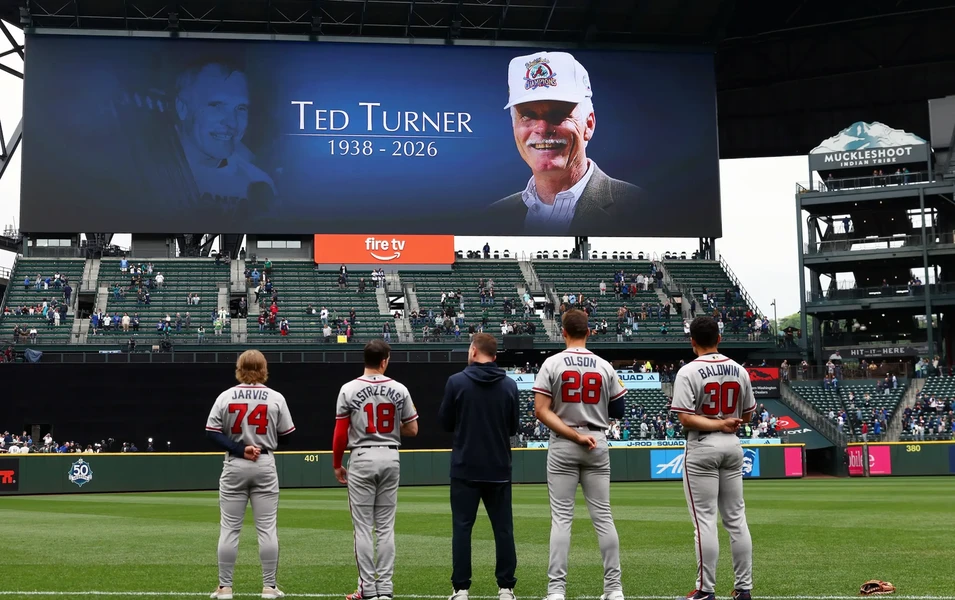
Ted Turner, the visionary media mogul who founded CNN in 1980 and fundamentally changed how the world consumes news, died on Wednesday at the age of 87. The announcement prompted an outpouring of tributes from journalists, politicians, and media executives across the globe, with many crediting Turner with creating not just a television channel but an entirely new category of journalism, the 24-hour continuous news cycle that has since defined how democracies, governments, and citizens everywhere receive and interpret breaking events.
Turner launched CNN on June 1, 1980, at a converted Jewish country club in Atlanta, Georgia. The project was widely mocked by established broadcast networks, who doubted that viewers would watch news continuously or that a cable startup could challenge the dominance of ABC, NBC, and CBS. Turner’s gamble proved to be one of the most transformative bets in media history. Within a decade, CNN had become the go-to source for breaking international news, and by 1991, the network’s live coverage of the Gulf War from Baghdad cemented its position as the world’s most-watched news organization.
‘When the U.S. and Israel bomb Iran and start a war, we know about it moments after it has started, sometimes even moments before. When Russian tanks cross the border into Ukraine, we watch as it is happening. This access to immediacy, our ability to be there as history is unfolding, much of that is possible thanks to the vision of Ted Turner,’ NPR noted in its tribute. That observation carries particular resonance in 2026, a year in which live coverage of the U.S.-Iran conflict and the Russia-Ukraine war continues to reach billions of viewers in real time, a tradition Turner began nearly half a century ago.
Turner was known for his larger-than-life personality, his environmental activism through the United Nations Foundation, and his ownership of major sports franchises including the Atlanta Braves. He sold CNN to Time Warner in 1996, a transaction that eventually led to the network’s absorption into Warner Bros. Discovery, but Turner’s creative vision and editorial ambition shaped everything that came after.
Tributes poured in from across the political spectrum. Former President Jimmy Carter’s presidential center released a statement calling Turner ‘a champion of global communication and a genuine force for peace.’ Journalists who began their careers at CNN described Turner as demanding, eccentric, and passionately committed to the idea that a free press could make the world safer. His 1991 creation of the Peacemaker Award, presented annually to international leaders who advance diplomatic solutions, reflected a belief that journalism and diplomacy could reinforce each other.
Read More: China Fireworks Plant Explosion in Hunan Province Kills Dozens as Search and Rescue Operations Wind Down
In the current media environment, fragmented across social platforms, partisan channels, and algorithm-driven feeds, Turner’s original vision of a single trusted source for unbiased continuous news has become both more relevant and more difficult to sustain. Media scholars note that the explosion of digital news following the blueprint Turner established has produced both unprecedented access and unprecedented misinformation, a paradox that Turner himself grappled with in his later years.
CNN and its global affiliates will dedicate special programming to Turner’s legacy throughout the week. His death arrives at a moment when the global news industry he helped create faces profound commercial, technological, and political challenges. Whether the institution he built retains the mission he envisioned is a question that journalists and media critics will debate long after the tributes conclude. What cannot be debated is the scale of his impact. Turner did not just change television. He changed how the world understands itself in real time.


