
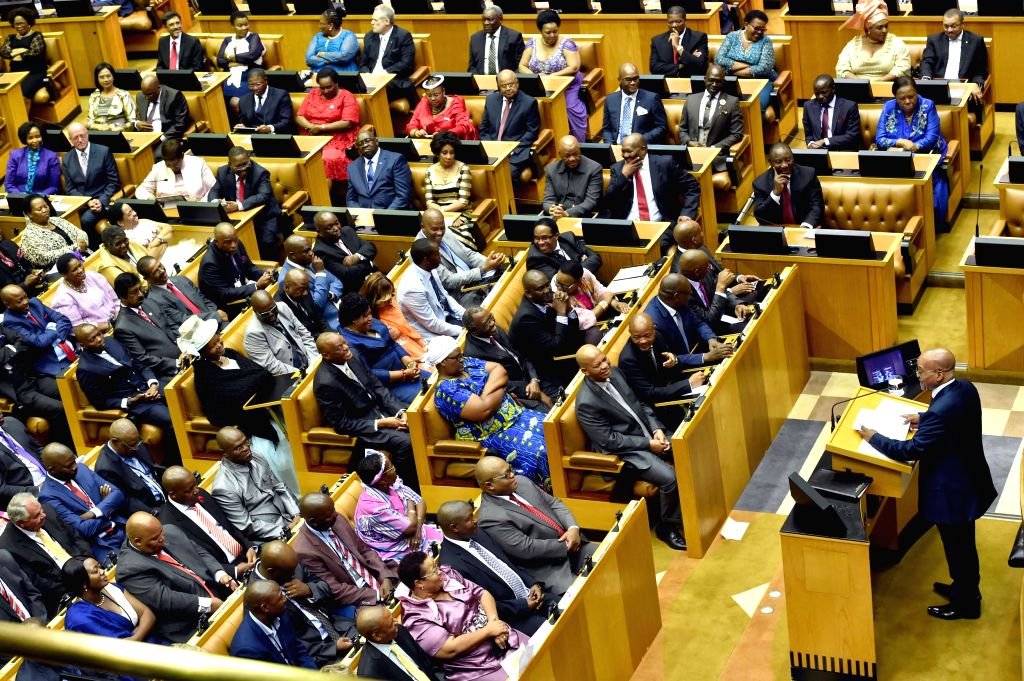
South African President Cyril Ramaphosa has told the nation he will not step down, defying mounting political pressure after the Constitutional Court ruled that Parliament acted unconstitutionally when it blocked impeachment proceedings against him in 2022. The ruling, which reignites one of the most damaging political crises in South Africa’s post-apartheid history, has plunged the country’s governing coalition into fresh uncertainty and added a volatile new dimension to politics in Africa’s largest economy.
In a televised address to the country, Ramaphosa said clearly: “While there have been calls in some circles that I should resign, nothing in the Constitutional Court judgment compels me to resign my office.” He acknowledged the court’s authority but said he plans to challenge the original independent panel report in court, a strategy that legal analysts say could delay any impeachment process by months.
The scandal at the heart of the case, known widely as Phala Phala, centers on the theft of at least $580,000 in foreign currency that investigators say was hidden inside furniture at Ramaphosa’s private game farm in Limpopo province. An independent panel concluded he may have a case to answer. The Constitutional Court has now confirmed that Parliament had no legal basis for blocking an impeachment inquiry, clearing the path for lawmakers to proceed with formal proceedings.
The Speaker of Parliament is expected to begin constituting an impeachment committee in the coming days. The committee process could keep the scandal at the center of South African political life for months, potentially well into the lead-up to local government elections. South Africa’s 10-year bond yield rose to around 8.69 percent following the ruling, its highest level in nearly a week, as investors reacted to the renewed political turbulence.
Opposition leader Julius Malema of the Economic Freedom Fighters has called on Ramaphosa to resign immediately. The ANC, Ramaphosa’s party and the governing force in South Africa’s coalition government, has so far closed ranks around him publicly, but privately, party officials acknowledge the situation is deeply uncomfortable. Coalition partners face their own calculations about whether supporting the president through an impeachment process serves their political interests.
The timing could hardly be worse for South Africa’s economy. Unemployment has already risen to 32.7 percent in the latest data. Johannesburg, the country’s economic capital, is facing what financial analysts describe as total fiscal collapse, with municipal debt and infrastructure failures reaching crisis proportions. A prolonged political battle at the presidential level diverts attention and resources from urgent economic and service delivery challenges that affect millions of South Africans daily.
International investors are watching closely. South Africa’s currency, the rand, has been under sustained pressure, and foreign direct investment flows have been sensitive to political risk signals. A drawn-out impeachment process, even if Ramaphosa ultimately survives it, would weigh on business confidence and reinforce perceptions of political instability in a country that needs stable governance to tackle its deep structural economic challenges.
Read More: Iran Rejects US Ceasefire Proposal 2026: Trump Calls Response Totally Unacceptable as Oil Prices Surge Past $100
The Democratic Alliance, the second-largest party in the coalition, has called for the impeachment process to proceed without delay. Other smaller coalition partners are more cautious, aware that any political crisis severe enough to destabilize the government could have unpredictable consequences across multiple sectors.
Ramaphosa has navigated crises before. He survived the initial Phala Phala storm in 2022 and won re-election as party leader. His supporters argue he remains the ANC’s best option for holding the coalition together. But the Constitutional Court’s ruling means he can no longer rely on Parliament as a shield. The fight now moves to multiple fronts simultaneously, the courts, the impeachment committee, and the court of public opinion, at a time when South Africa can least afford the distraction.


