
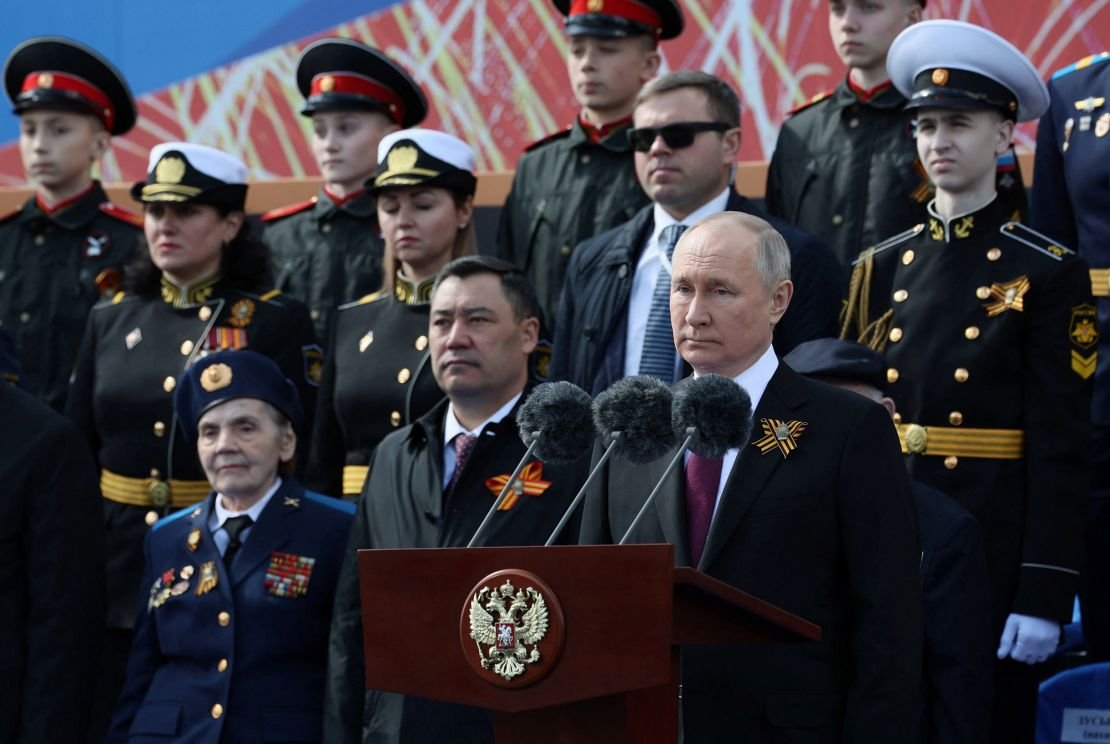
Russia President Vladimir Putin stood before the world in Moscow on May 9, 2026, hosting foreign leaders at the 81st anniversary Victory Day military parade celebrating the Soviet Union’s World War II victory, while a U.S.-brokered three-day ceasefire in Ukraine kept the most urgent fears of disruption at bay.
Security in Moscow was extraordinarily tight for the occasion. Ukrainian drone attacks in previous months had targeted Russian infrastructure with increasing precision, and Russian authorities had deployed layered air defense systems across the capital. The ceasefire, negotiated through American diplomatic channels, held through the parade’s duration, offering a brief window of relative calm in a war that has now entered its fifth year.
The parade itself carried significant geopolitical messaging. The presence of foreign leaders from multiple countries demonstrated that Russia has not been completely isolated by Western sanctions and diplomatic pressure. Beijing’s relationship with Moscow remains a constant undercurrent in every multilateral conversation, with Western governments repeatedly pressing China to use its economic leverage to push Russia toward genuine negotiations.
The Trump administration’s approach to the Ukraine conflict has shifted significantly from the Biden era. Trump’s team has pushed both Kyiv and Moscow toward negotiations, framing the war as an economic burden the United States cannot continue underwriting indefinitely. U.S. military and financial support for Ukraine continues, but at a different level of public commitment than the previous administration maintained.
Ukrainian President Volodymyr Zelensky has navigated this changed relationship carefully, maintaining European support as the primary diplomatic frame while managing a bilateral relationship with Washington that requires constant recalibration. European governments, particularly in Poland, the Baltic states, and Germany, remain the most committed voices for continued Ukrainian territorial integrity.
The broader context of the Iran war and global energy crisis has paradoxically strengthened Russia’s financial position. Moscow is the world’s second-largest oil producer and a major gas supplier to several Asian economies. Rising global energy prices have partially offset the impact of Western sanctions on Russian government revenues, giving Putin’s administration more fiscal room than Western policymakers anticipated when the sanctions regime was designed.
Read More: Iran Rejects US Ceasefire Proposal 2026: Trump Calls Response Totally Unacceptable as Oil Prices Surge Past $100
The ceasefire’s three-day window expired without a breakthrough toward a longer-term agreement. Frontline positions in eastern Ukraine remain largely static, with neither side capable of decisive military breakthrough. The war has settled into a grinding attritional contest that exhausts both sides while the global context shifts dramatically around it.
Europe’s energy independence efforts, accelerated by the 2022 Russian gas cutoff, have now been further tested by the 2026 Hormuz crisis. The continent is simultaneously managing reduced Russian pipeline gas, disrupted Qatari LNG, and elevated market prices across every energy category. The political pressure this generates inside European governments makes sustained support for Ukraine financially and politically harder to maintain over time.
The coming months will test whether the U.S.-brokered diplomatic framework can expand beyond a three-day ceasefire into a genuine pathway toward settlement, or whether the war continues indefinitely as a frozen conflict with periodic escalation.


