
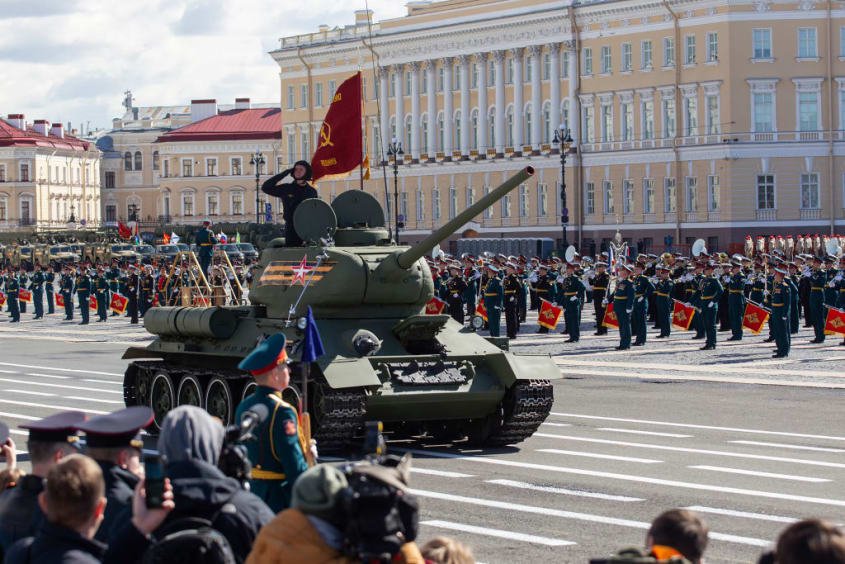
Russia’s annual Victory Day celebration, the most symbolically important military display in the Russian calendar, was scaled back dramatically this week in Moscow, with organizers citing genuine fears of Ukrainian drone attacks on the parade itself. The move, confirmed by NPR’s correspondent in Moscow, signals something that Russian propaganda has worked for months to conceal: the war in Ukraine is arriving in Russia in ways that the Kremlin can no longer manage out of public view.
Victory Day, held annually on May 9, commemorates the Soviet Union’s defeat of Nazi Germany in World War II. For President Vladimir Putin, the event serves as an annual demonstration of Russian military power, with tanks, missiles, and thousands of troops parading through Red Square before a massive public audience. This year’s scaled-back event strips away that symbolism precisely when Putin needs it most. The NPR correspondent noted that the decision functions as a visible symbol of Russians’ growing frustration with the ongoing war.
The threat generating the concern is real and well-documented. Ukraine has dramatically expanded the range and sophistication of its drone operations over the past 18 months, striking Russian military infrastructure, fuel depots, and defense facilities hundreds of kilometers inside Russian territory. The possibility of a drone strike on Moscow during the country’s most watched public event would carry enormous symbolic weight, potentially more damaging to Russian domestic morale than any battlefield loss.
Ukraine’s military leadership has not claimed responsibility for any specific threat against the parade. Kyiv regularly conducts drone operations deep inside Russia but maintains strategic ambiguity about specific targets. The very uncertainty surrounding Ukrainian intentions is itself a psychological and strategic weapon. Russia’s decision to scale back the parade confirms that Ukrainian operational pressure is forcing behavioral changes at the highest levels of Russian state ceremony.
For the international community watching this conflict, the parade decision carries implications beyond the symbolic. It suggests that Russia’s military leadership assesses Ukrainian long-range strike capability as a genuine and growing threat to the Russian homeland. That assessment, if accurate, changes the strategic calculus around Western arms supplies, Ukrainian territorial objectives, and the timeline for any negotiated settlement.
Read More: Modi Wins State Elections Midway Through Third Term as India Watches Iran War Reshape Its Energy Future
European NATO members, already unsettled by Washington’s unilateral approach to the Iran conflict, are watching the Ukraine situation with fresh attention. The continent’s security cannot be separated from the two simultaneous crises now unfolding in the Middle East and Eastern Europe. Defense budgets across the EU are at their highest levels in decades. The question facing European governments is whether those budgets are growing fast enough to match the speed of the threats they face.
Russia’s economy continues to absorb the costs of the war under severe Western sanctions. The Strait of Hormuz crisis, paradoxically, has provided Moscow with some economic relief, as higher global oil prices increase the value of Russian oil exports that continue to flow through non-sanctioned channels. Energy revenue sustains the Russian war machine even as the Victory Day parade reminds ordinary Russians how much the war has cost them in blood and treasure.


