
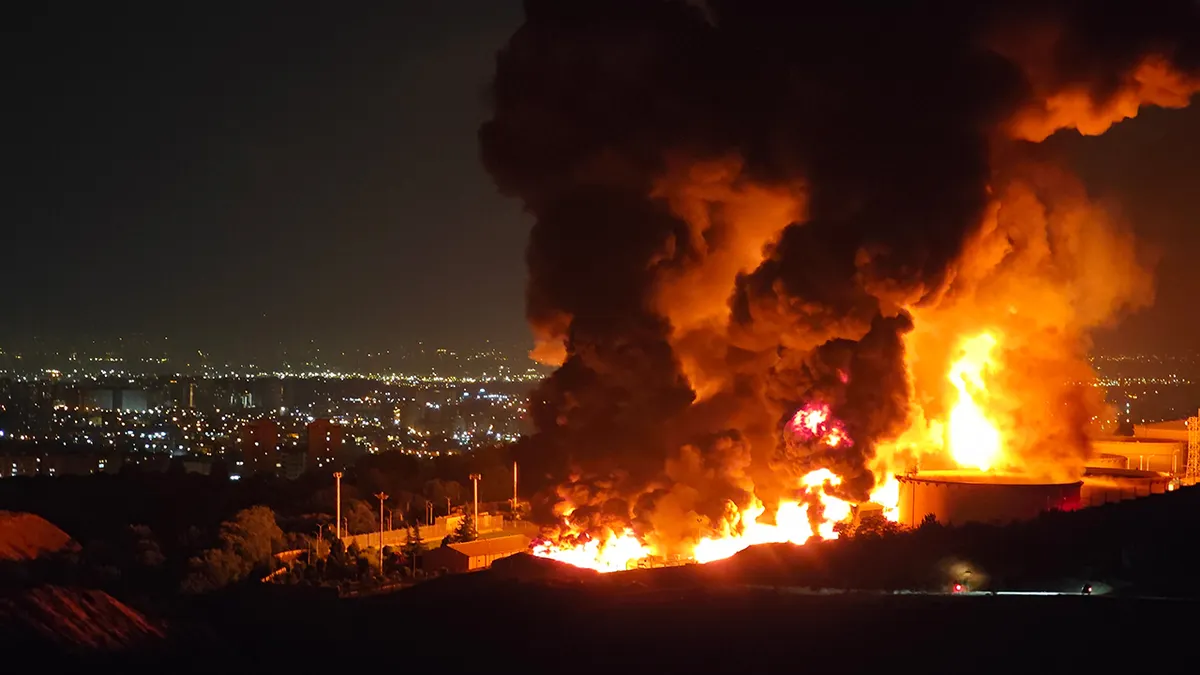
The world’s most important energy corridor has become a battlefield, and the consequences for the global economy are worsening by the day. Iran launched fresh missile and drone attacks against the United Arab Emirates on Friday, May 9, 2026, in strikes that the UAE Defense Ministry confirmed its air defenses engaged, intercepting two ballistic missiles and three drones. Hours earlier, US forces fired on two Iranian oil tankers attempting to evade the American naval blockade in the Strait of Hormuz. Simultaneously, President Trump insisted a ceasefire remains technically in effect. The gap between that claim and reality on the water is becoming impossible to ignore.
Brent crude settled at $101.29 per barrel on Friday, representing a roughly 1 percent gain on the day. West Texas Intermediate settled marginally higher at $95.42 per barrel. Both benchmarks posted weekly losses exceeding 6 percent, however, as markets priced in optimism about a potential peace deal. That optimism is precarious. Every exchange of fire in the Gulf reminds traders that the deal does not yet exist, and that the Strait, closed since early March, remains shut to normal commercial shipping.
The strategic stakes cannot be overstated. Before the February 2026 US-Israeli strikes on Iran, the Strait of Hormuz carried 27 percent of the world’s seaborne crude oil and 20 percent of global liquefied natural gas. Shipping companies are refusing to transit the waterway. Insurance war-risk premiums for vessels attempting to pass have surged from 0.125 percent to between 0.2 and 0.4 percent of ship insurance value per transit, adding hundreds of thousands of dollars in costs per voyage even for operators willing to take the risk. Most are not willing.
The human dimension of the crisis has reached a level that international maritime organizations describe as catastrophic. Up to 20,000 seafarers remain stranded on approximately 2,000 vessels in the Strait region, unable to transit safely and unable to return to port. The International Maritime Organization has pressed for resolution, but individual governments and shipping companies are not waiting for political solutions. They are rerouting cargo around the Cape of Good Hope, adding weeks to delivery times and billions to shipping costs.
Trump’s “Project Freedom” escort initiative, in which US Navy vessels accompany commercial ships through the Strait, has produced limited results. While two US-flagged merchant vessels crossed in the hours following the announcement, shipping industry leaders have refused to treat the escort program as a reliable safety guarantee. International Transport Workers’ Federation General Secretary Stephen Cotton explicitly warned shipowners not to send crews through the Strait without binding assurances from Iran, which do not yet exist.
Read More: Ted Turner Dies at 87: Legacy of CNN Founder Who Transformed Global News Coverage Honored Worldwide
The commodity shock extends far beyond oil and gas. Fertilizer supplies disrupted by the Strait closure could drive global fertilizer prices 15 to 20 percent higher in the first half of 2026. That price pressure feeds directly into food production costs worldwide, with the greatest impact on developing nations that lack strategic fertilizer reserves and depend on seasonal agricultural cycles. Analysts warn of food price increases extending into 2027 across multiple continents.
Iran is reviewing a US peace proposal. Secretary of State Rubio, currently in Europe, said Washington expects a response by Friday. The market is watching every diplomatic signal and every military exchange with equal intensity. ANZ Research noted this week that “the risk of a proposed US peace deal breaking down will likely keep oil markets volatile.” For a world already battered by post-pandemic inflation and the lingering effects of prior energy price surges, a prolonged Hormuz closure would represent one of the most damaging economic events of the decade.


