
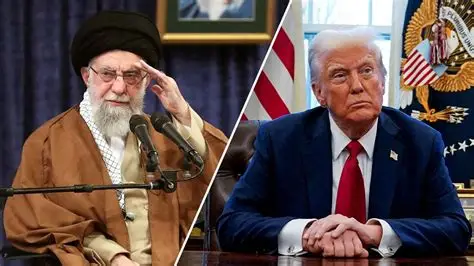
The world woke up this Monday to a deepening impasse between the United States and Iran, after Tehran submitted a counter-proposal to Washington’s ceasefire plan that President Donald Trump immediately dismissed as “TOTALLY UNACCEPTABLE.” The rejection has rattled global energy markets, pushed Brent crude above $104 a barrel, and raised fears that the conflict, now in its third month, could drag on indefinitely with severe consequences for the world economy.
Iran’s counter-proposal, delivered through Pakistani mediators on Sunday morning, included demands that went far beyond what Washington had signaled it would accept. Tehran asked for US recognition of Iranian sovereignty over the Strait of Hormuz, the release of frozen Iranian assets, a full lifting of sanctions, and financial compensation for war damages. Crucially, Iran’s proposal made no mention of its nuclear program, the single issue that the Trump administration has identified as its central red line.
Trump posted his rejection within hours on his Truth Social platform. US Ambassador to the United Nations Mike Waltz, appearing on television the day before the counter-proposal arrived, said the United States had laid out a “very clear red line” in its latest proposal. Those familiar with the negotiations say the gap between the two sides remains enormous, making a near-term ceasefire agreement look increasingly unlikely.
Israeli Prime Minister Benjamin Netanyahu spoke by phone with Trump on Sunday evening, according to two separate Israeli sources. The conversation came as Israeli strikes in Lebanon reignited fears that the US-brokered ceasefire between Israel and Hezbollah may also be unraveling. Continued Hezbollah rocket attacks on northern Israel and Israeli retaliatory strikes have brought that front back to dangerous levels of tension, adding yet another theater of potential escalation to an already volatile region.
The economic consequences of the stalled talks are being felt everywhere. The International Energy Agency has described the current situation as the most severe oil supply shock in recorded history. Goldman Sachs estimates the disruption has cut global oil output by 14.5 million barrels per day, a 57 percent reduction from the affected region. Refineries in Asia, particularly in South Korea, Japan, and India, are scrambling to find alternative crude supplies at premium prices.
In the United States, Energy Secretary Chris Wright said the administration is considering suspending the federal gas tax to provide relief at the pump. He told NBC’s Meet the Press that the administration has already drawn down the Strategic Petroleum Reserve, revised EPA regulations on fuel blends, and pressured refiners to shorten maintenance periods to maximize output. Wright acknowledged that the timeline for price relief depends entirely on when the Strait of Hormuz reopens.
Read More: Iran Sends New Peace Proposal Through Pakistan as Trump Demands Unconditional Surrender and US Naval Blockade Costs Tehran $500 Million Daily in Lost Oil Revenue
The broader geopolitical dimension is deepening. Trump has announced “Project Freedom,” a plan to escort commercial ships through the Strait of Hormuz under US military protection. Iran has responded by warning that any such escort would constitute a ceasefire violation and could trigger a direct military response. The risk of escalation, already high, has edged higher.
For governments across Europe, Asia, and Africa, the coming days are critical. Every major economy is watching the Trump-Xi summit in Beijing this week, hoping that US-China cooperation on the Strait of Hormuz situation might provide a diplomatic off-ramp that direct US-Iran negotiations have so far failed to deliver. The world is running out of easy options, and the cost of continued inaction keeps rising every day.


