
May 17, 2026 | Gaza War | Middle East | Conflict
Israel military killed Izz al-Din al-Haddad, the head of Hamas’s armed wing the Qassam Brigades, in a targeted strike in Gaza on Friday, removing one of the architects of the October 7, 2023, attacks that triggered the current war. Hamas confirmed the death, stating that seven others were also killed in the strike. The operation represents one of the most significant Israeli military actions of the conflict and comes at a moment when the Gaza humanitarian situation has deteriorated to a catastrophic level.
Al-Haddad’s death follows a sustained Israeli campaign to dismantle Hamas’s military leadership. The Qassam Brigades, founded in the early 1990s, has served as Hamas’s primary military instrument and was central to the planning and execution of the October 7 attack that killed approximately 1,200 Israelis and led to the capture of over 200 hostages. Eliminating its leadership is a core Israeli military and political objective.
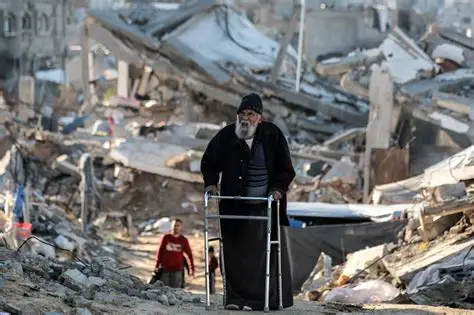
The strike occurs against a humanitarian backdrop that international organizations describe as catastrophic. Community kitchens in Gaza serving basic foods like lentils have become the last food source for hundreds of thousands of people, as aid flows into the territory have dropped by 37 percent and only 10 percent of required humanitarian funding has been secured. The United Nations and multiple aid organizations have warned repeatedly that famine conditions now affect large portions of the population.
The Iran conflict and its closure of the Strait of Hormuz added an additional layer of regional complexity to the Gaza war earlier this year. A fragile ceasefire between the United States, Israel, and Iran is in place, but its durability remains uncertain, and the interplay between the Gaza conflict and the broader regional Iran dynamic continues to shape diplomatic calculations.
The Eurovision Song Contest held its final on Saturday in Basel, Switzerland, amid tight security and political controversy, with significant protests over Israel’s participation. The contest, which typically focuses on cultural celebration, has become a venue for intense political expression this year given the ongoing Gaza conflict. Protesters and critics across Europe have called for Israel’s exclusion from the competition.
The hostage situation remains a central and painful dimension of the conflict. Israel says some of those taken on October 7 remain alive in captivity in Gaza. Every military operation carries the risk of harm to hostages. Every ceasefire negotiation collides with the fundamental incompatibility of Israel’s stated objective of eliminating Hamas as a governing and military force and Hamas’s insistence on its own survival and governing authority.
Read More: Sudan War Enters Deadliest Phase as UN Warns of Drone Strikes Killing Hundreds and Conflict Spreads Across Multiple Regions
International pressure for a new ceasefire agreement has intensified following al-Haddad’s killing. Qatar, Egypt, and the United States have all communicated through diplomatic channels in recent days. However, the killing of Hamas’s military commander will almost certainly harden Hamas’s internal political position against concessions in the short term.
For Gaza’s civilian population, the continuing conflict means continuing death, displacement, and deprivation. The path from the current state of war to any durable political arrangement that allows reconstruction and civilian recovery to begin remains deeply unclear.


