
May 17, 2026 | Ukraine War | Russia | International Security
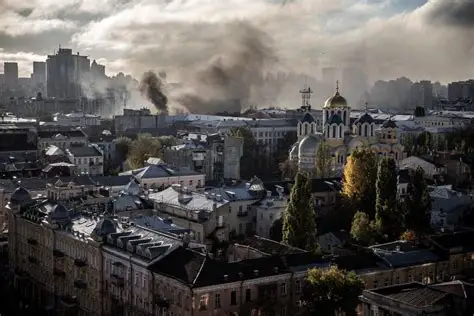
Ukrainian President Volodymyr Zelenskyy led an official national day of mourning on Friday after Russian cruise missiles flattened an apartment building in Kyiv in one of the deadliest single attacks on the Ukrainian capital since Russia’s full-scale invasion began in February 2022. The strike, which took place Thursday, killed multiple residents and injured dozens more, with rescue teams working through the night to pull survivors and victims from the rubble.
The attack came just hours after an earlier daytime strike had already killed at least six people in the capital, demonstrating the intensity and persistence of Russia’s missile campaign against civilian infrastructure. Images and video from the scene showed a residential building reduced largely to twisted steel and concrete, with apartments exposed across multiple floors. Emergency services worked alongside ordinary citizens helping to search the debris.
Russia’s continued targeting of Ukrainian cities with cruise missiles and ballistic weapons reflects its broader strategic calculation that sustained pressure on civilian morale and urban infrastructure can erode Ukraine’s ability and willingness to continue fighting. The strategy has not succeeded in breaking Ukrainian resistance, but the human cost has been devastating. Four years into the war, Ukrainian cities continue to absorb strikes that would constitute major news events almost anywhere else in the world.
Zelenskyy used the day of mourning to issue appeals to Ukraine’s Western allies for additional air defense systems capable of intercepting the cruise missiles that are causing the greatest civilian casualties. Ukrainian air defense forces intercept a significant proportion of incoming missiles, but even partial penetration of defenses causes enormous destruction given the destructive power of the weapons involved.
The geopolitical context surrounding the attack is highly charged. The Trump-Xi summit in Beijing included discussions about the Russia-Ukraine war, though details of what was said remain opaque. Russia’s Deputy Foreign Minister stated publicly during the week that efforts to achieve a diplomatic resolution with Ukraine were ‘largely exhausted,’ signaling Moscow’s continued preference for military pressure over negotiation.
CIA Director John Ratcliffe met with Cuban officials including a grandson of Raul Castro during a high-level visit to Havana this week, a meeting that illustrated how the intersecting geopolitical pressures of 2026 are reshaping diplomatic engagements in unexpected directions. Cuba, which has long relied on Venezuela for energy support, is facing severe fuel shortages following U.S. actions against Venezuela’s government in January.
For Ukraine, the most immediate need remains military. Air defense munitions, artillery shells, and long-range strike capabilities are the instruments with which it prosecutes its defense. Western support for Ukraine’s military requirements continues, but the pace of deliveries and the political sustainability of that support in partner countries remains a persistent variable.
Read More: South Africa’s President Cyril Ramaphosa Refuses to Resign After Constitutional Court Revives Phala Phala Impeachment Proceedings
The day of mourning also served as a reminder to international audiences of the ongoing human reality of the war. Casualties, displacement, and material destruction continue at scale. The United Nations has documented millions of Ukrainians displaced within the country and abroad. Reconstruction costs are estimated in the hundreds of billions of dollars, and the war shows no signs of approaching a negotiated conclusion.
As Russia continues to strike, and Ukraine continues to resist, the Kyiv attack on Thursday joins a long and tragic list that reflects one of the most consequential conflicts of the 21st century.


